
Ayahuasca Tourism: How Globalisation is Impacting Indigenous Heritage
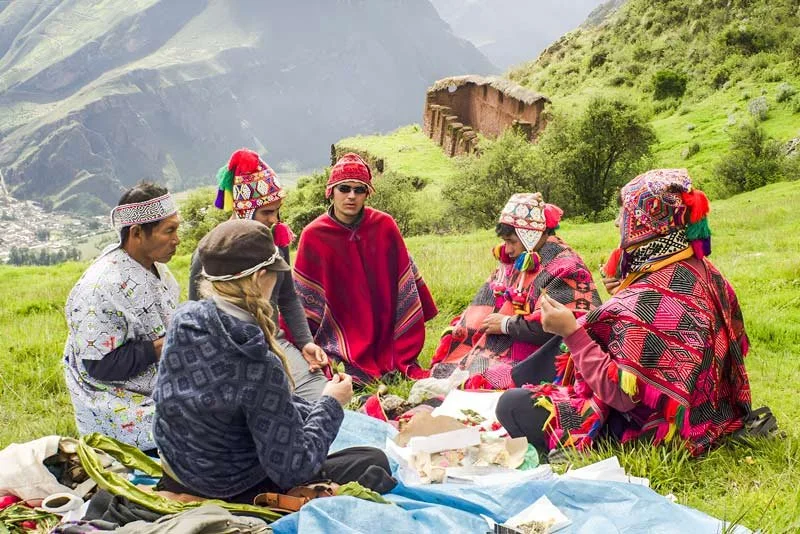
Until the early 20th century, the world outside the Amazon region knew very little or nothing about ayahuasca. The brew first came to Western attention during the 1960s countercultural movement, but was still mostly limited to fringe groups of intrepid psychonauts and travellers.
“There were no external signs of ayahuasca anywhere in Iquitos. I don't remember seeing any advertisements in tourist areas in the markets. It wasn’t even spoken of on a societal level,” said Aili Pyhälä, co-director of the World Ayahuasca Forum, and a socio-environmental scientist who first visited Peru for field work in the year 2000. “Even with the locals, there were few people speaking about ayahuasca and it was mainly limited to the artist crowds and intellectuals.”
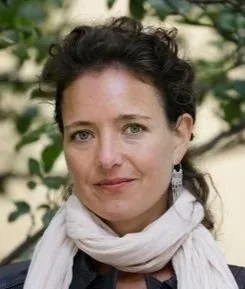
Aili Pyhälä, co-director of the World Ayahuasca Forum
From a young age, Aili has been passionate about the interaction between human rights and environmental justice. This led to her work with indigenous peoples across different continents. She has spent decades of deep engagement with Amazonian cultures and the preservation of ayahuasca and other plant medicines.
Scholars have proposed that ayahuasca has been used by Indigenous peoples for millennia, though its documented history only goes back 150 years. It has roots in more than 160 traditional communities, where its varying uses include community healing, curing physical disease, and seeking knowledge from spiritual realms.
In the Global North, ayahuasca’s recent popularity has emerged with the ongoing psychedelic renaissance and revived interest in using such substances for treatment of mental health. Simultaneously, people are being increasingly drawn to Indigenous practices and ways of being.
Capitalising on this curiosity, a growing number of retreat centres across South America are offering therapeutic experiences for Western tourists involving one or multiple traditional-style ayahuasca ceremonies. Some owned by foreign businesses, some established by locals, and some combining native and international facilitators.
The number of operational centres has dramatically increased, going from virtually none in the year 2000, to 232 in the year 2019, according to research from the International Center for Ethnobotanical Education, Research, and Service (ICEERS). ICEERs has been pioneering research and education into the global use of plant medicines for over 15 years. Since this data was taken, the figure has continued to rise, as more people have shared powerful benefits of the ayahuasca across mainstream media.
“The change has been exponential,” said Aili, who returned to Iquitos 17 years after living there.
Many worry that the growing retreat industry is putting traditional heritage at risk. Ayahuasca ceremonies have been deeply embedded in the community life of many Indigenous groups across the Amazon, with payment being in custodianship to their local community, as opposed to anything monetary. The medicine has long been regarded as deeply sacred, possessing a spirit which cannot be profited from.
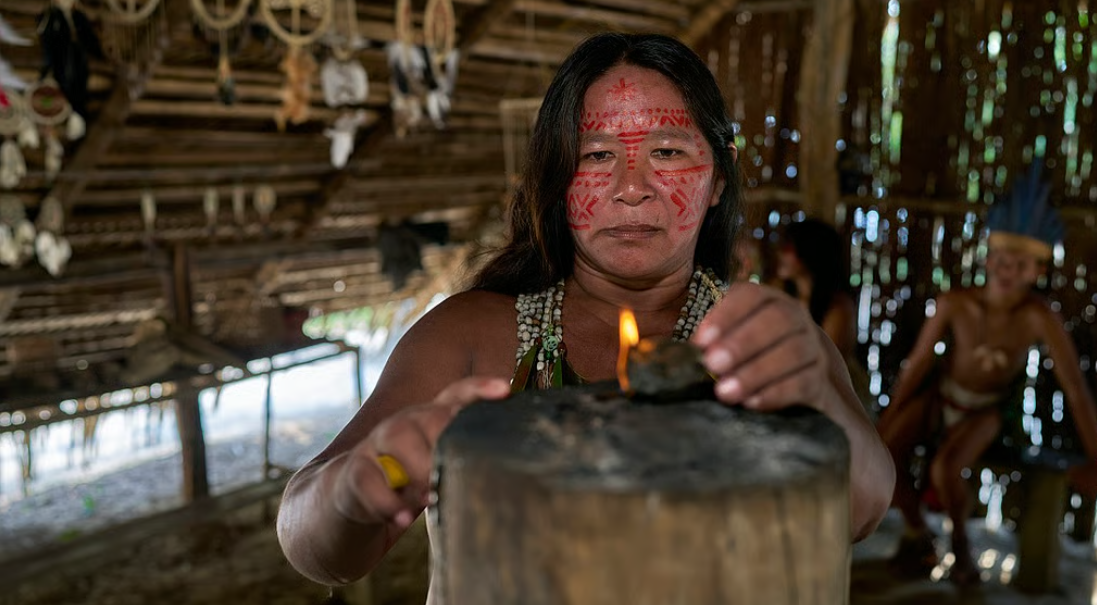
In a Guardian article, two Indigenous women speak about how ayahuasca’s commodification has begun to fray their community’s traditional values.
“Although our yachaks (traditional healers) may treat individuals, their true role is to maintain balance within the community and among relationships between people, forests and all beings. Healing, in our worldview, is collective because we are all interconnected. When yachaks focus only on “ayahuasca” tourism for profit, abandoning this sacred responsibility, we must ask: what have they become?” they write.
The women note that the younger generations are starting to follow in example, beginning to value ayahuasca for its profit margin more so than its spiritual significance. They write, “The danger lies not only in losing the essence of our ceremonies but in distorting our collective memory, values and roles.”
However, as capitalism continues to dominate across the world, the monetization of ayahuasca is becoming somewhat necessary for the financial survival of local communities.
Aili spoke to this tension, saying, “There are still shamans deep in the jungle who refuse to take money for serving ayahuasca because they don’t relate to this medicine as a commodity and it would be unethical to take money for healing. But they’re more and more rare. Everyone has to make a living and even the most powerful masters and remote indigenous people are increasingly dependent on the global market economy.”
Globalisation is bringing new financial pressures to Amazonian Indigenous communities. Travel and Tourism is growing faster than any other consumer goods sector, according to The World Travel and Tourism Council. While it’s not the primary cause of land loss, such as cattle ranching, commercial agriculture, and illegal mining, the rapid development of infrastructure is adding further pressure on Indigenous territories. Increasingly, Indigenous peoples are being forced into global industries like tourism to make ends meet, and ayahuasca is a particularly profitable opportunity.
Western tourists, particularly those interested in ayahuasca, can over-idolise local healers. They may assume people possess inherent spiritual and moral authority simply by virtue of their ethnic identity, regardless of actual training or connection to ayahuasca. Such glamourisation can be taken advantage of.
“You’ve started getting all sorts of local entrepreneurs that see they can make good money from ayahuasca tourism. You don’t have to do that much to be able to do that. It's not hard to fool a newcomer by learning how to cook the brew, making the space and learning a few songs,” said Aili.
In many traditional contexts, ayahuasca would only be served by a curandero, or healer, who had decades of training with the medicine. In the Shipibo tradition, for example, curanderos enter strict diets and restrictions for months on end, to be in clear communion with the Master plant they are dieting. Yet, in an unregulated industry, many guides, especially those driven by pure financial motives, lack this depth of training.
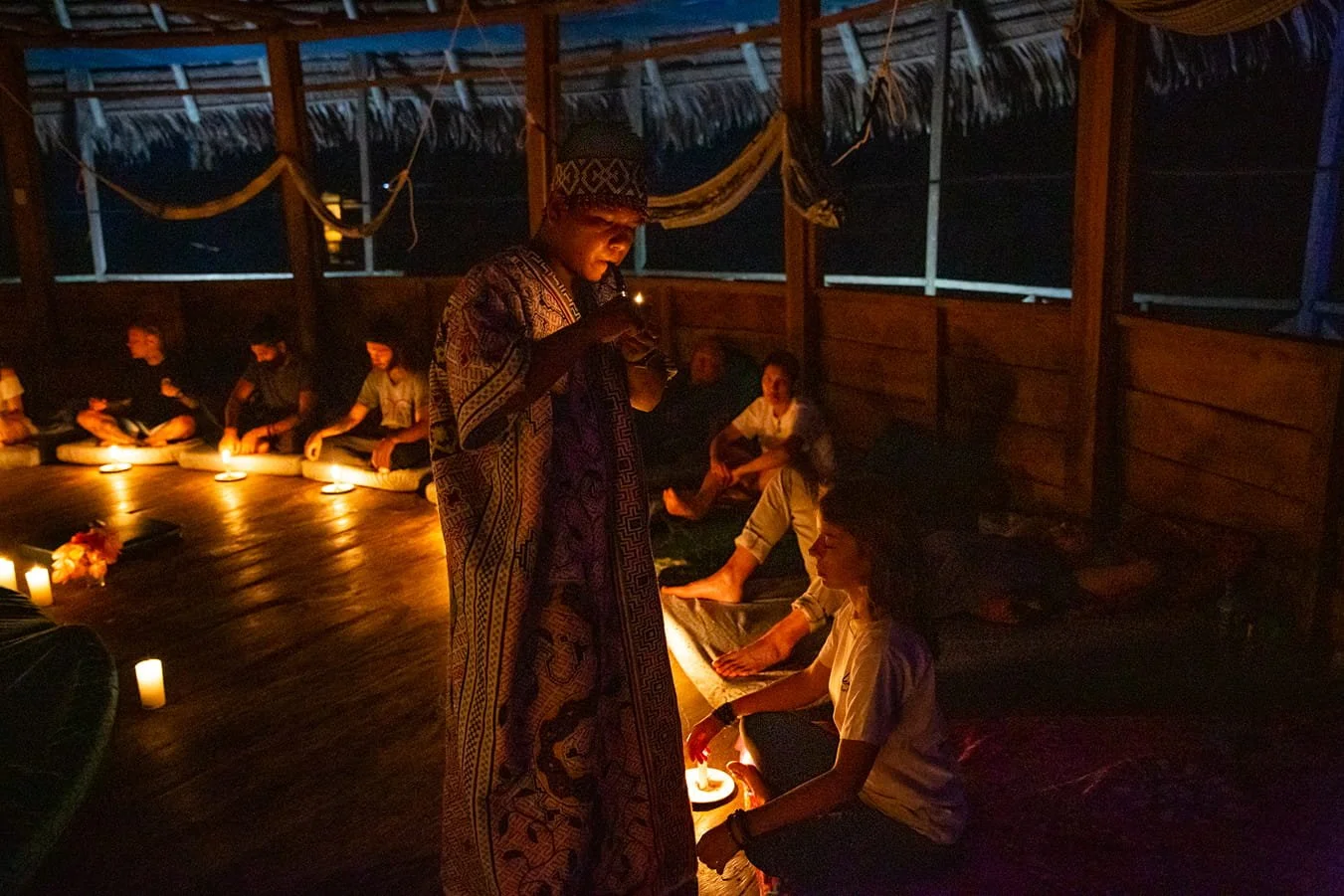
Without the capacity to safely hold space, and navigate the complex emotional, psychological, physical and spiritual experiences that ayahuasca can produce, such negligence can cause serious harm. And more concerning still, are those who pose as healers and exploit retreat participants in an open and sensitive state. This is not a hypothetical risk; multiple tourists have reported being financially and sexually abused by self-proclaimed shamans during ayahuasca retreats.
“There’s a distortion of reality that easily makes the person holding the space appear even more powerful,” said Aili. “It’s worrying for those doing really good work, as it puts everyone working with this medicine at risk.”
In spite of these charlatans, Aili iterated the powerful work being done by the many healers who provide ayahuasca both in and outside the Amazon. In the midst of a global mental health and meaning crisis, the continued spread of Indigenous wisdom through ayahuasca globalisation has the potential of hugely positive implications.
Ayahuasca doesn’t only help people heal, but also can make them question their relationship with others and with the natural world. Studies show ayahuasca promotes feelings of gratitude, empathy and nature relatedness. In joint ceremonies between Israeli and Palestinian participants, both groups felt a strong appreciation of one another's culture and felt a sense of shared humanity.
Importantly, the movement also marks a shift from a colonialist superiority which has until recently prevailed.
“Maybe, for the first time in several generations, the Western world is starting to see Indigenous people as true knowledge holders and real healers. And yes, the growing global interest in ayahuasca has something to do with it, but it's not the only reason. Either way, it's very different from what used to be written in history and anthropology books, where they were called primitive and savage.” said Aili.
Aili speaks to perhaps the most pressing dichotomy of the ayahuasca movement: With such potential benefits, how can medicine continue to be shared without harming Indigenous culture?
“If more people travel to the Amazon to drink ayahuasca, this is unsustainable both for the negative socio-cultural and ecological impacts of tourism. However, if Indigenous people instead travel to other places to share their medicines, then you potentially get an emptying of healers from villages and communities,” she said.
“It’s almost like we’re given a number of choices. All of which have potentially disturbing implications. I don’t have any answers about what’s the most ethical route. And at the moment we’re seeing all the answers happening.”
Aili is a co-director of the World Ayahuasca Forum, a first-of-its kind conference dedicated to intercultural dialogue about the globalisation of ayahuasca and other Indigenous plant medicines. The forum represents the convergence of two influential movements: the Indigenous Ayahuasca Conference, led by Indigenous peoples, and the World Ayahuasca Conference, organised by ICEERS. While there is no clear answer to what ethical ayahuasca tourism looks like, dialogue with Indigenous people is essential, and this forum will be a key converging point for reflections, consensus building and innovation.
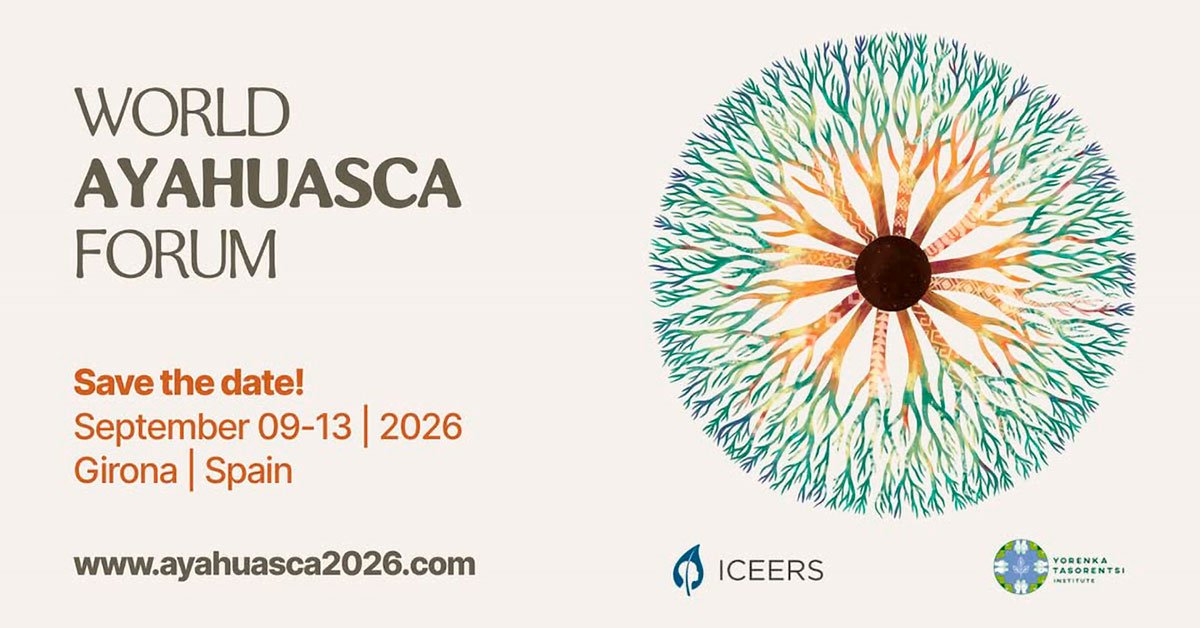
The Forum will feature a diverse line-up of Indigenous leaders, scientists, policy makers, NGO representatives and beyond. In addition to dialogues, there will be visual arts, music and performance, depicting and celebrating the diverse cultural traditions, particularly those from Amazonia.